
Antonia Pozzis Gedicht Notturno invernale (Winterliches Notturno) / Antonia Pozzi’s poem Notturno invernale (Wintry Nocturne)
Podcast
In Antonia Pozzis Gedicht Notturno invernale (Winterliches Notturno) geht es um die nächtliche Begegnung mit einem geheimnisvollen Kind. Darin spiegeln sich Pozzis Einstellung zu ihrem Leben und zu ihrer Dichtung wider.
Winterliches Notturno
Der Schnee verschluckt fast,
Kindlein, deinen Schritt,
dein leises Wandeln auf dem Weg
in meinen jungfräulichen Spuren.
Wie das schwarze Gewand der Kiefern
sich reinigt unter dem weißen Flaum,
so läutert auch die Seele sich
in dem purpurnen Licht des Himmels.
Schweigend senkt das Dach
der funkelnden Sterne
sich über den nachtblauen Wald
und über die schlafende Welt.
Wie das Flüstern eines Flusses
inmitten des Schleiers aus Eis
umfängt der Pulsschlag deiner Seele
mich in der Gnade der weiten Stille.
Mein Herz, ein Wanderer, erzittert,
gestreift von dem Echo des Zitterns
eines anderen tastenden Schritts
in der vom Wind durchflüsterten Nacht.
Die Krone deiner reinen Augen,
Kindlein, wacht läuternd über meinen Weg
durch ein schattenloses Moor
in dieser göttlichen Stunde.
Zwei Schwalben sind wir,
Kindlein, deren Flugbahnen sich kreuzen
in der Unendlichkeit des Himmels
vor unserem Aufbruch zu fernen Gefilden.
Noch morgen wird das Herz, allein
mit seinem Schicksal, das ferne
schwesterliche Flügelzittern fühlen
auf seinem angstumwehten Flug.
Antonia Pozzi: Notturno invernale (Januar 1931)
Mystische Erfahrung der Gottesnähe
Ein Spaziergang in einer winterklaren Nacht, in der es zu einer mystischen Begegnung mit einem geheimnisvollen Kind kommt – eine solche Konstellation wird bei vielen wohl eine christliche Deutung provozieren. Dies gilt erst recht, wenn man weiß, dass die Dichterin aus einem katholisch geprägten Land kommt.
In der Tat ist eine Interpretation des Gedichts in einem religiösen Kontext eine mögliche Lesart der Verse. Das mysteriöse Kind, dem das lyrische Ich in einer „göttlichen Stunde“ begegnet, würde dann auf eine Art Epiphanie-Erlebnis hindeuten, die Erfahrung einer plötzlichen Gottesnähe.
Allerdings müsste die Deutung in diesem Fall nicht notwendigerweise auf einen christlichen Zusammenhang beschränkt bleiben, das göttliche Kind also nicht unbedingt mit dem Jesuskind gleichgesetzt werden. Eine im Mondlicht glitzernde, flirrend weiße Winterlandschaft ist vielmehr auch ein perfektes Bild für die vollkommene Leere, die auch in nicht-christlichen mystischen Lehren ein Synonym für das unfassbare, unsagbare Göttliche ist.
Die Begegnung mit dem göttlichen Kind wäre demnach ein Sinnbild für das Eintauchen in eine andere, vom vergänglichen Rausch des Alltags unberührte Welt, eine kurze Befreiung aus dem „schattenlosen“, also völlig finsteren „Moor“, das die menschliche Existenz ansonsten bestimmt.
Ein poetischer „Kinderblick“
Bei der Ermöglichung solcher Erfahrungen kommt der Poesie nach Pozzi eine zentrale Funktion zu. So schreibt sie dieser 1933 in einem Brief die Aufgabe zu, „den Schmerz, der in unserer Seele brodelt und pocht, in sich aufzunehmen und ihn zu besänftigen“ [1].
Die Poesie ist für Pozzi „eine Katharsis des Schmerzes“, ein Mittel, das Leiden an der Existenz zu überwinden, indem sie die unter den Alltagsdingen verschütteten Schönheiten des Lebens zur Sprache bringt:
„Für diejenigen, die ihre Tage nur noch in der Farbe des Sonnenuntergangs sehen und in ihrem Himmel eine tödliche Blässe aufsteigen fühlen, für diejenigen, die noch mit halluzinierenden Augen den Zauber der Dinge trinken, ihn aber nicht mehr in Worte fassen können (…), ist es wie eine Wiederbelebung, eine junge Seele zu finden, die unseren unausgesprochenen Gesang befreit.“ [2]
Vor diesem Hintergrund ergeben sich auch Bezüge zur Dichtungstheorie Giovanni Pascolis, in der „il fanciullino“ (das kleine Kind) ein Sinnbild für den unverstellten Blick des Dichters auf die Welt ist. Ohne diesen Blick, so Pascoli,
„würden wir nicht nur so viele Dinge nicht sehen, die wir für gewöhnlich nicht beachten, sondern wir könnten nicht einmal darüber nachdenken (…). Er [der „fanciullino“] entdeckt in den Dingen die genialsten Ähnlichkeiten und Beziehungen. (…) Seine Sprache ist auch nicht so unvollkommen wie die eines Menschen, der eine Sache nur halb ausspricht, sondern im Gegenteil so großzügig wie die eines Menschen, der mit einem Wort zwei Gedanken zum Ausdruck bringt.“ [3]
Das geheimnisvolle Kind in Pozzis Notturno invernale ließe sich so auch als Bild für den poetischen Blick auf die Welt verstehen – einen Blick, der uns die Welt wieder in ihrem ursprünglichen paradiesischen Zustand sehen lässt, indem er sie in der beglückenden Fülle ihres Beziehungsreichtums erfahrbar macht. Es wäre demnach ein zauberischer, nicht aber ein verzaubernder Blick – denn er zeichnet sich ja gerade dadurch aus, dass er den Schleier des bösen Zaubers, der auf der Welt unseres Alltags lastet, wenigstens für ein paar Augenblicke lüftet.
Glückliche Momente, aber kein glückliches Leben: Zu Pozzis Biograhie
Antonia Pozzi selbst hat ihre Lyrik allerdings nicht das von ihr beschworene erfüllte Leben beschert. 1912 in Mailand geboren, besuchte sie dort das Gymnasium, wo sie sich in ihren Latein- und Griechischlehrer verliebte. Die Beziehung wurde jedoch von ihren Eltern hintertrieben und ging so 1933 in die Brüche.
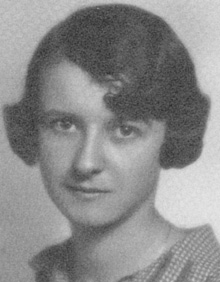
Ihr Philosophie- und Literaturstudium an der Universität Mailand schloss Pozzi 1935 mit einer Arbeit über Gustave Flaubert ab. Nach dem Studium unternahm sie kürzere Reisen durch Italien sowie nach Österreich, Deutschland, Frankreich und England, wobei sie sich auch darum bemühte, die Sprachen der bereisten Länder zu erlernen.
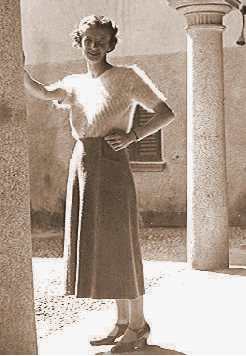
Am liebsten hielt sie sich jedoch im Landhaus ihrer Familie im nördlich von Mailand gelegenen Gebirge auf. Dort unternahm sie ausgedehnte Radtouren, betätigte sich als Fotografin, schrieb Tagebuch und verfasste unzählige Briefe. Daneben war das lombardische Bergland auch der Schwerpunkt ihrer dichterischen Tätigkeit. Ihre etwa 300 Gedichte wurden allerdings sämtlich erst nach ihrem Tod veröffentlicht.
Im Dezember 1938 nahm Pozzi sich, zwei Monate vor ihem 27. Geburtstag, das Leben. In einem Abschiedsbrief an ihre Eltern begründete sie ihren Freitod mit „tödlicher Verzweiflung“. Die Gründe dafür waren vielfältig. So fühlte Pozzi sich – wie ihr Gedicht Grido (Schrei) bezeugt [4] – als eine Art geistige Schiffbrüchige in einer von Gott verlassenen Welt. Auch ihre Familie, von deren traditionellem Katholizismus sie sich gelöst hatte, bot ihr keinen Halt. Hinzu kam die sich zuspitzende Repression im faschistischen Italien. Den 1938 erlassenen Rassegesetzen waren auch einige Personen aus Pozzis Freundeskreis zum Opfer gefallen.
Eine besonders einfühlsame Beschreibung von Pozzis Persönlichkeit stammt von der Romanautorin und Literaturwissenschaftlerin Maria Corti, die Pozzi an der Universität kennengelernt hatte. Sie vergleicht die Dichterin mit
„jene[n] Gebirgspflanzen (…), die sich nur an den Rändern steiler Abhänge und Felsspalten ausbreiten können. Sie war äußerst empfindsam, mit einem zarten schöpferischen Drang ausgestattet, aber gleichzeitig eine Frau mit starkem Charakter und einer feinen philosophischen Intelligenz. Sie war vielleicht die unschuldige Beute einer paranoiden väterlichen Zensur des Lebens und der Poesie. Zweifellos war ihr Verhältnis zu dem in sich geschlossenen religiösen Umfeld ihrer Familie angespannt. Das geliebte lombardische Land, die Welt der Pflanzen und Flüsse trösteten sie sicherlich mehr als die Gegenwart ihrer Mitmenschen.“ [5]
Nachweise
[1] Pozzi, Antonia: Lettera a Tullio Gaudenz; Mailand, 11. Januar 1933; antoniapozzi.it.
[2] Ebd.
[3] Pascoli, Giovanni: Il fanciullino (Das kleine Kind / Der kleine Junge; 1897, erweitert 1903/1907), Kap. 3.
[4] Pozzi, Antonia: Grido (Schrei); 10. Februar 1932; antoniapozzi.it.
[5] Corti, Maria, übersetzt nach dem Zitat in Ferrari, Nina: „Nel prato azzurro del cielo“. Poesia e natura in Antonia Pozzi; tuobiografo.it, 13. November 2019.
English Version
Nocturnal encounter with a mysterious child
Antonia Pozzi’s poem Notturno invernale (Wintry Nocturne)
Wintry Nocturne
The snow almost swallows up,
little child, your murmuring movements,
your silent wandering on the path
in my groping footsteps.
As the black robe of the pines
purifies itself under the snow-white fluff,
so the soul floats in a sea of purity
in the crimson light of heaven.
Silently, the veil of twinkling stars
sinks down onto the night-blue forest
and onto the sleeping world,
wrapped in a silky cloak of dreams.
Like the whisper of a river
amidst the cloak of ice,
the pulse of your soul embraces me
in the all-encompassing silence.
My heart, a wanderer, trembles,
stroked by the echo of the trembling
of another groping step
in the whisper of the wind.
The crown of your pure eyes,
little child, watches over my way
through a shadowless marsh
in this divine hour.
Like two homesick swallows,
lost in the infinity of the sky,
we meet in the virgin desert of winter
before our departure for distant realms.
Tomorrow the heart, alone
with its fate, will still feel
the distant trembling of sisterly wings
on its fearful flight.
Antonia Pozzi: Notturno invernale (January 1931)
Mystical Experience of Closeness to God
A walk through a clear winter night, culminating in a mystical encounter with a mysterious child – such a constellation will probably provoke a Christian interpretation in some readers. This is all the more likely when taking into account the poet’s origins in a Catholic country.
Indeed, an interpretation of the poem in a religious sense cannot be entirely ruled out. The mysterious child whom the lyrical I encounters in a „divine hour“ would then point to a kind of epiphany experience, in the sense of a sudden closeness to God.
However, the interpretation in this case would not necessarily have to be limited to a Christian context, i.e. the divine child would not automatically have to be equated with the Child Jesus. A shimmering white winter landscape glittering in the moonlight is also a fitting image for the perfect emptiness, which is a synonym for the inconceivable, ineffable divine in non-Christian mystical beliefs as well.
The encounter with the divine child would thus be a symbol of immersion in another world untouched by the fleeting hustle and bustle of everyday life, a brief liberation from the „shadowless“, i.e. completely dark „marsh“ that otherwise dominates human existence.
A Poetic „Child’s View“
According to Pozzi, poetry has a central function in enabling such experiences. Thus, in a letter written in 1933, she ascribes to poetry the task of „absorbing and soothing the pain that seethes and throbs in our soul“ [1].
Poetry is for Pozzi „a catharsis of pain“, a means of overcoming the suffering of existence by giving voice to the beauties of life buried under everyday things:
„For those who see their days only in the colour of the sunset and feel a deadly pallor rising in their sky, for those who still absorb with hallucinating eyes the magic of things but can no longer put it into words (…), it is like a reanimation to find a young soul who frees our unspoken song.“ [2]
Against this background, parallels arise with Giovanni Pascoli’s theory of poetry, in which „il fanciullino“ (the little child) is a symbol of the poet’s undistorted view of the world. Without this view, says Pascoli,
„not only would we fail to see so many things that we usually ignore, but we would not even be able to think about them (…). He [the „fanciullino“] discovers the most ingenious similarities and relationships in things. (…) Moreover, his language is not as imperfect as that of a man who only half expresses a thing, but, on the contrary, as generous as that of a man who expresses two thoughts in one word.“ [3]
The mysterious child in Pozzi’s Notturno invernale could thus also be understood as an image for the poetic view of the world – a view that allows us to see the world again in its original paradisiacal state by enabling us to experience it in the delightful fullness of its richness of relationships. It would thus be a magical, but not an bewitching view – because it is characterised precisely by the fact that it lifts the veil of the evil spell that weighs on the world of our everyday life, at least for a few moments.
Fulfilled Moments, but not a Fulfilled Life: On Pozzi’s Biography
Antonia Pozzi herself, however, did not have the fulfilled life her poetry evoked. Born in Milan in 1912, she attended grammar school there, where she fell in love with her Latin and Greek teacher. The relationship, though, was thwarted by her parents and thus broke up in 1933.
Pozzi completed her philosophy and literature studies at the University of Milan in 1935 with a thesis on Gustave Flaubert. After her studies, she undertook shorter trips through Italy as well as to Austria, Germany, France and England, always endeavouring to learn the languages of the countries she visited.
Her favourite place to stay, though, was her family’s country house in the mountains north of Milan. There she undertook extensive bicycle tours, practised photography, wrote in her diary and exchanged letters with friends. The Lombardy mountains were also the focus of her poetic activity. This was not, however, connected with publications: Her approximately 300 poems were all published only after her death.
In December 1938, Pozzi took her own life, two months before her 27th birthday. In a farewell letter to her parents, she explained her suicide with „mortal despair“. The reasons for this were manifold. As her poem Grido (Cry) [4] shows, Pozzi felt herself like a kind of spiritual castaway in a world abandoned by God. Her family, from whose traditional Catholicism she had become estranged, was no support for her either. Added to this were the increasing repressions in fascist Italy – notably the racial laws passed in 1938, to which some of Pozzi’s friends fell victim.
A particularly empathetic description of Pozzi’s personality comes from the novelist and literary scholar Maria Corti, who had met Pozzi at university. She compares the poet to
„those mountain plants (…) that can only grow on the edges of steep slopes and crevices. She was highly sensitive, endowed with a delicate creative urge, but at the same time a woman of strong character and a remarkable philosophical intelligence. She was perhaps the innocent prey of a paranoid paternal censorship of life and poetry. Undoubtedly, her relationship with her family’s restricted religious environment was strained. The beloved Lombard countryside, the world of plants and rivers certainly comforted her more than the presence of her fellow men.“ [5]
References
[1] Pozzi, Antonia: Lettera a Tullio Gaudenz; Milan, January 11, 1933; antoniapozzi.it.
[2] Ibid.
[3] Pascoli, Giovanni: Il fanciullino (The little child/boy; 1897, expanded 1903/1907), chapter 3.
[4] Pozzi, Antonia: Grido (Cry); Februar 10, 1932; antoniapozzi.it.
[5] Corti, Maria, translated after the quote in Ferrari, Nina: „Nel prato azzurro del cielo“. Poesia e natura in Antonia Pozzi; tuobiografo.it, November 13, 2019.
Bilder / Images: Gustaf Fjæstad (1868 – 1948): Schneebedeckte Bäume bei Mondschein (1910)/ Snow-covered trees in the moonlight (1910); Wikimedia commons; Unbekannter Fotograf: Antonia Pozzi in den 1930er Jahren (Wikimedia commons)/ Unknown photographer: Antonia Pozzi in the 1930s (Wikimedia Commons)

