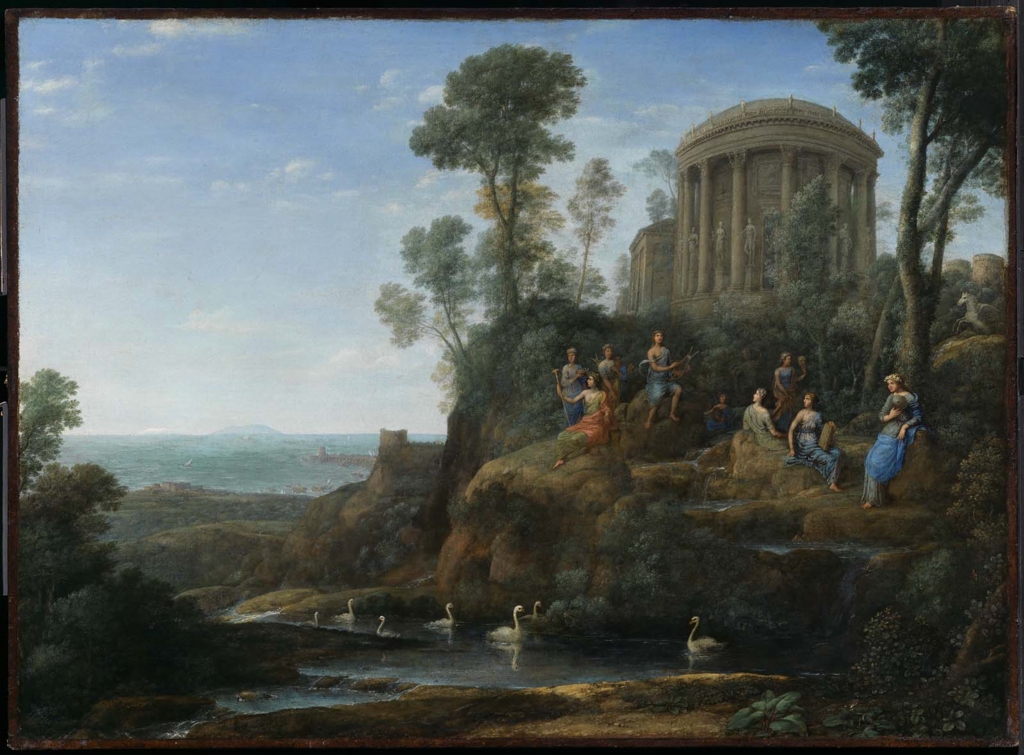
Paul Verlaines Bekenntnis zum subjektiven Element in der Lyrik / Paul Verlaine’s Commitment to the Subjective Element in Poetry
In Abgrenzung zu der in der zweiten Hälfte des 19. Jahrhunderts vorherrschenden Parnasse-Dichtung setzt Verlaine in seiner Lyrik stärker auf das subjektive Element: die Selbstaussprache des lyrischen Ichs und die dichterische Gestaltung von dessen Gestimmtheit.
Verwaisten Schmerzes zittern des Waldhorns Wellen
durch das Gehölz und brechen, wo um die Hügel
flatternd klagen des Windes Flügel
gleich einem fernher hallenden Bellen.
Des Wolfes Seele heult darin und steigt
auf in die Sonne, die sterbend sich senkt
ins einsame Herz, das trostbeschenkt
nun lächelnd im Leid sich neigt.
Und diese gedämpfte Klage durchschweben
Schleier von Schnee auf Schwingen,
die segnend das weiche Sterben durchdringen.
Wie eines Herbstes Seufzen beleben
Lüfte aber das Land, das einen warmen
Traum sich webt in des Dunkels Armen.
Paul Verlaine: Le son du cor s’afflige vers les bois … aus: Sagesse (1880). Oeuvres complètes, Bd. 1, S. 276. Paris 1902: Vanier
Die Parnasse-Dichtung
1866 erschien im Pariser Verlagshaus von Alphonse Lemerre eine Anthologie zeitgenössischer französischer Lyrik. Aus dem dafür gewählten Titel – Le Parnasse contemporain – entwickelte sich der Name „Parnassiens“, als Bezeichnung für eine der einflussreichsten Dichtergruppen, die sich in Frankreich in der zweiten Hälfte des 19. Jahrhunderts herausbildeten [1].
Der in Anlehnung an die Heimat der Musen in der griechischen Mythologie – den Berg Parnassos – gewählte Name war bei der Parnasse-Dichtung Programm. Anders als die romantische Dichtung, die bewusst Traditionsstränge der Volkskunst – wie Märchen und Volkslieder – aufgriff, folgten die Parnassiens dem Ideal einer streng vom Alltagsleben geschiedenen Dichtung. Die Kunst sollte nur für und aus sich heraus existieren.
Der Verwirklichung dieses Ideals eines „l’art pour l’art“ dienten in der Parnasse-Dichtung insbesondere zwei Leitideen. Zum einen bemühte man sich um eine an antiken Vorbildern geschulte Formstrenge. Zum anderen folgte man dem Prinzip der „impersonnalité“. Dieses zielte auf eine Dichtung ab, in der Gefühle nur im Medium „objektiver“, oft antiker Sujets, nicht aber durch die unmittelbare Selbstaussprache eines lyrischen Ichs zum Ausdruck gebracht werden sollten [2].
Verlaine und die parnassische Lyrik
Paul Verlaine war in seinen Anfängen selbst von der parnassischen Lyrik beeinflusst. Dies ist nicht zuletzt daran abzulesen, dass in die oben erwähnte Anthologie auch sieben Gedichte von Verlaine aufgenommen wurden.
Schaut man sich das oben wiedergegebene Gedicht Verlaines aus der Perspektive der Parnassiens an, so fallen sowohl Gemeinsamkeiten als auch Unterschiede zu deren dichterischen Idealen ins Auge. Zu Ersteren zählt insbesondere die Sonett-Form, verbunden mit einer ausgefeilten Reimtechnik, die den umschließenden Reim der beiden Quartette in den Terzetten mit einem Paarreim verknüpft.
Was in dem Gedicht allerdings fehlt, ist die von den Parnassiens angestrebte Überpersönlichkeit der dichterischen Aussage. Anstatt die Vorgänge nur objektiv zu beschreiben, werden diese aus der Perspektive des lyrischen Ichs gedeutet und mit subjektiven Empfindungen verknüpft. So wird der Ton des Waldhorns mit dem Schmerz des Verlassenseins assoziiert und der Sonnenuntergang als gleichzeitig tröstend wie trauervoll beschreiben.
Hinzu kommen Elemente, die keinerlei objektive Entsprechung haben, sondern nur in der Phantasie des lyrischen Ichs existieren. Hierzu zählen etwa die klagende Seele des Wolfs oder die assoziative Verknüpfung des eigenen Leids mit der Dämmerungsstimmung im Bild des „Herbstseufzers“.
Das parnassische Ideal einer autonomen, ihren eigenen Gesetzen folgenden Kunst wird von Verlaine zwar geteilt. Er sieht es allerdings weniger durch eine olympische Attitüde der Dichtung gewährleistet als durch eine besondere Musikalität der Verse, durch die diese einen eigenständigen Klang- und Wirklichkeitsraum erschaffen [3].
Verlaines dichterische Ideale: „impair“ statt „impersonnalité“
Die Abweichungen von der parnassischen Poetik in Verlaines Dichtung sind kein Zufall. Sie entsprechen vielmehr ganz Verlaines eigenen dichterischen Idealen, wie er sie in seinem programmatischen Gedicht Art poétique (Die Dichtkunst) zum Ausdruck gebracht hat.
In bewusster Abgrenzung zum parnassischen Ideal der „impersonnalité“, der souveränen Überpersönlichkeit der Dichtung, fordert Verlaine hier, der Dichter solle „l’Impair“ bevorzugen. Dieses Wort bezeichnet zum einen das „Ungerade“ und damit die gewollte Abweichung von der parnassischen Poetik. Es enthält zum anderen – als Substantiv – aber auch das bewusste Bekenntnis zur „Ungeschicklichkeit“ – und damit zu dem (nach parnassischem Dichtungsverständnis) „unschicklichen“ Sich-Einmischen und Sich-Aussprechen des Subjekts, das in seiner Einzigartigkeit strukturell jeder Norm widerspricht [4].
Als Ausdruck einer subjektiven Empfindung ist die im Gedicht gestaltete Stimmung Verlaine zufolge stets etwas Flüchtiges („chose envolée“), etwas, das sich einer klaren Festlegung entzieht. Dies gilt gleichermaßen für das lyrische Ich selbst, das sich im Gedicht präsentiert als „une âme en allée / vers d’autres cieux“ – als eine Seele also, die im Moment ihrer Erscheinung immer schon zu „zu anderen Himmeln“ unterwegs ist. Eben dadurch, dass das lyrische Ich und die von ihm gestaltete Stimmung in der Schwebe bleiben, öffnet sich das Gedicht gegenüber den Lesenden, die so dessen Empfindungswelt mit ihrer eigenen verbinden können [5].
Das Abenteuer des „Wahrsagens“
Abschließend fordert Verlaine in der Art poétique, der Vers solle „une bonne aventure“ sein [6]. Dieser Ausdruck fasst gut zusammen, was er mit seiner Lyrik anstrebt.
„Aventure“ bezeichnet bei Verlaine nicht nur das „Abenteuer“ bzw. das „Wagnis“, sich immer wieder auf neue Stimmungen und deren dichterische Gestaltung einzulassen. Der Begriff beinhaltet auch das Bewusstsein, sich hierbei in Gefahr zu begeben („s’aventurer“), im Sinne der Möglichkeit eines persönlichen Scheiterns an der dichterischen Aufgabe, aber auch im Sinne der Gefahr des Nichtverstandenwerdens oder der Ablehnung des gewählten dichterischen Ausdrucks.
Vor allem aber versteckt sich in „[dire] la bonne aventure“ auch das klassische Bild des Dichters als eines Wahrsagers. Wenn Verlaine hier auf diesen Topos anspielt, so verleiht er ihm freilich zugleich eine eigene, seinem Lyrikverständnis entsprechende Färbung.
„Wahrsagen“ bedeutet bei Verlaine eben nicht mehr, dass der Dichter über eine wie auch immer geartete prophetische Gabe verfügt. Es bezieht sich vielmehr im Wortsinn auf das „Sagen des Wahren“, im Sinne einer authentischen, nicht durch metrische oder inhaltliche Konventionen verfälschten Wiedergabe subjektiver Stimmungen.
Nachweise
[1] Vgl. Le Parnasse contemporain. Recueil de vers nouveaux. Paris 1866: Lemerre. Auf die erste Anthologie folgten 1871 und 1876 noch zwei weitere Gedichtsammlungen unter demselben Titel.
[2] Ein Überblick über Beweggründe, Entwicklung und die wichtigsten poeotologischen Grundsätze der parnassischen Lyrik findet sich auf espacefrançais.com: Courants littéraires: Le Parnasse.
[3] Hierauf wird im nächsten Post noch näher eingegangen.
[4] Paul Verlaine: Art poétique (1874); Erstveröffentlichung in Paris Moderne (1882); in einer Gedichtsammlung Verlaines zuerst in Jadis et naguère, (1884); hier zit. nach Oeuvres complètes, Bd. 1, S. 311 f. (hier S. 311). Paris 1902: Vanier.
[5]/[6] Ebd., S. 312.
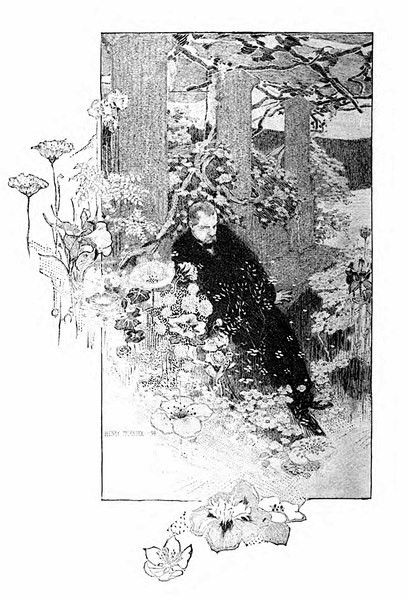
English Version
Turning away from Olympus
Paul Verlaine’s Commitment to the Subjective Element in Poetry
In contrast to the Parnasse poetry that predominated in France in the second half of the nineteenth century, Verlaine’s poetry places greater emphasis on the subjective element: the self-expression of the lyrical I and the poetic shaping of its mood.
Orphaned in pain, the waves of the bugle tremble
through the woods and break where around the hills
the wings of the wind are wailing,
fluttering like a distant barking.
The wolf’s soul howls in them and rises
into the sun that sinks dying
into the lonely heart, which comforted
enters the garden of peace, smiling in sorrow.
And through this hushed lament
veils of snow are floating on wings
that blessingly embrace the gentle dying.
Like the sighing of autumn
breezes stroke the land that weaves
a fragrant dream in the arms of the dark.
Paul Verlaine: Le son du cor s’afflige vers les bois … from: Sagesse (1880). Oeuvres complètes, Vol. 1, p. 276. Paris 1902: Vanier
The Parnassian Poetry
In 1866, Alphonse Lemerre published an anthology of contemporary French poetry. Following the title chosen for it – Le Parnasse contemporain – the term „Parnassiens“ became the name for one of the most influential groups of poets that emerged in France in the second half of the 19th century [1].
The name chosen in reference to the home of the Muses in Greek mythology – Mount Parnassus – was programmatic in Parnassian poetry. Unlike Romantic poetry, which consciously took up elements of folk art – such as fairy tales and traditional songs – the Parnassians followed the ideal of a poetry strictly separated from everyday life. Art was to exist only for and out of itself.
The realisation of this ideal of „l’art pour l’art“ in Parnassian poetry was guided by two ideas in particular. Firstly, the Parnassians strove for a formal rigour inspired by antique models. Secondly, the principle of „impersonnalité“ was established. It aimed at a poetry in which feelings were to be expressed only in the medium of „objective“, often ancient subjects, but not through the immediate self-expression of a lyrical I [2].
Verlaine and Parnassian Poetry
Paul Verlaine was himself influenced by Parnassian poetry in his early days as a poet. This is evident not least from the fact that seven poems by Verlaine were included in the anthology mentioned above.
If we look at Verlaine’s poem reproduced above from a Parnassian perspective, both similarities and differences to their poetic ideals catch the eye. The former include in particular the sonnet form, combined with a sophisticated rhyming technique that links the enclosing rhyme of the two quartets with a couplet rhyme in the tercets.
What is lacking in the poem, however, is the impersonal character of poetic expression that the Parnassians were aiming for. Instead of describing events only objectively, they are interpreted from the perspective of the lyrical I and linked to subjective feelings. Thus, the sound of the bugle is associated with the pain of abandonment and the sunset is described as both comforting and mournful.
In addition, there are elements that have no objective equivalent at all, but exist only in the imagination of the lyrical self. These include, for example, the lamenting soul of the wolf or the associative linking of one’s own suffering with the twilight mood in the image of the „autumn sigh“.
It is true that Verlaine shares the Parnassian ideal of an autonomous art that follows its own laws. However, he sees it less guaranteed by an Olympic attitude of poetry than by a special musicality of the poem, through which the verses create an independent space of sound and reality [3].
Verlaine’s Poetic Ideals: „impair“ instead of „impersonnalité“
The deviations from Parnassian poetics in Verlaine’s poetry are no coincidence. Rather, they correspond entirely to Verlaine’s own poetic ideals as expressed in his programmatic poem Art poétique (The Art of Poetry).
In deliberate distinction from the Parnassian ideal of „impersonnalité“, the sovereign impersonality of poetry, Verlaine demands here that the poet should prefer „l’Impair“. On the one hand, this word denotes the „odd“, the „uneven“, and thus the intentional deviation from Parnassian poetics. On the other hand, it also contains – as a noun – the conscious commitment to „awkwardness“ – and thus to the „unseemly“ (according to the Parnassian understanding of poetry) involvement and expression of the subject, which in its uniqueness defies every norm [4].
As an expression of subjective feeling, the mood created in the poem is, according to Verlaine, always something fleeting („chose envolée“), something that eludes clear determination. This applies equally to the lyrical I, which presents itself in the poem as „une âme en allée / vers d’autres cieux“ – as a soul that, at the moment of its appearance, is already on its way to „other skies“. Precisely because the lyrical I and the mood it creates remain in limbo, the poem opens itself up to the readers, who can thus connect its emotional world with their own [5].
The Adventure of „Fortune Telling“
Finally, Verlaine demands in his Art poétique that each verse should be „une bonne aventure“ [6]. This expression sums up well what he strives for with his poetry.
In Verlaine’s work, „aventure“ not only refers to the „adventure“ or the „risk“ of repeatedly engaging with new moods and their poetic shaping. The term also includes the awareness of putting oneself in danger („s’aventurer“), in the sense of possible personal failure in the poetic task, but also in the sense of risking not to be understood or to find the chosen form of poetic expression rejected by others.
Above all, however, „[dire] la bonne aventure“ also includes the classical concept of the poet as a fortune teller. Verlaine alludes to this topos here, but shapes it according to his understanding of poetry.
In Verlaine’s case, „fortune-telling“ no longer means that the poet has a prophetic gift of some kind, that he can foresee the future or reveal a hidden truth. Rather, „telling the truth“ here means the authentic reproduction of subjective moods that is not distorted by metrical or content-related conventions.
References
[1] Cf. Le Parnasse contemporain. Recueil de vers nouveaux. Paris 1866: Lemerre. The first anthology was followed by two more collections of poems under the same title in 1871 and 1876.
[2] An overview of the motives, development and the most important poeotological principles of Parnassian poetry can be found on espacefrançais.com: Courants littéraires: Le Parnasse.
[3] This will be discussed in more detail in the next post.
[4] Paul Verlaine: Art poétique (1874); first published in Paris Moderne (1882); in a poetry collection by Verlaine first in Jadis et naguère, (1884); here quoted after Oeuvres complètes, Vol. 1, p. 311 f. (here p. 311). Paris 1902: Vanier.
[5]/[6] Ibid., p. 312.
Bilder / Images: Claude Lorrain (um 1600 – 1682): Apollo und die Musen auf dem Berg Helion (Parnassus) / Apollo and the Muses on Mount Helion(Parnassus); Boston, Museum of Fine Arts (Wikimedia commons); Henry Bainbridge McCarter: Illustration zu einem Band mit Gedichten von Paul Verlaine / Illustration for a book with poems by Paul Verlaine (S. 81). New York 1906: Duffield & Co.
 LiteraturPlanet