
Agustín Lara / Natalia Lafourcade: Aventurera
Musikalischer Adventskalender 2023: Mexiko
Das Lied Aventurera von Agustín Lara (1897 – 1970) ist eine Art Trostlied für eine Frau, die mit ihrem Traum von einem freieren Leben in einem Bordell gestrandet ist. Bei Natalia Lafourcade wird daraus ein Protestsong für weibliche Emanzipation.
Podcast:
Abenteurerin
Verkauf deine Liebe teuer, Abenteurerin!
Lass dir das Leid, das du erdulden musstest, teuer bezahlen!
Derjenige, der um den Honig deiner Lippen bittet,
/ soll seine Sünde mit Diamanten bezahlen. /
Verkauf deine Liebe teuer, Abenteurerin!
Lass dir das Leid, das du erdulden musstest, teuer bezahlen!
Sieh zu, dass dein weiterer Weg weniger steinig ist,
nachdem die Schande deines grausamen Schicksals
deinen herrlichen Frühling hat welken lassen!
Verkauf deine Liebe teuer, Abenteuerin!
Natalia Lafourcade: Aventurera (Text mit leichten Abweichungen vom Original; s.u.)aus: Mujer Divina. Homenaje a Agustín Lara (Die göttliche Frau. Eine Hommage an Agustín Lara); 2012 (Album mit Covern von Songs Agustín Laras)
Videoclip:
Übersetzung der Worte in den einleitenden Sequenzen:
„Im Namen des Vaters, des Sohnes und des Heiligen Geistes – Amen! Möge der Herr mit euch sein. Mögen die Gnade unseres Herrn Jesus Christus, die Liebe unseres Vaters im Himmel und die Gemeinschaft des Heiligen Geistes mit uns allen sein!“
„Habe ich dich also erwischt! Ab zum Direktor!“
„Beeil dich, Yajaira, du kommst zu spät zur Schule!“ – „Reg dich doch nicht so auf, Mama!“ – „Wie bist du nur wieder angezogen, Mädchen! Zieh den Rock runter!“ – „Mensch, der ist doch gar nicht so kurz!“
Originalversion von Agustín Lara (Live-Aufnahme)
Originaltext (Abweichungen von der von Lafourcade gesungenen Fassung: „Mund“ statt „Lippen“, „Brillanten“ statt „Diamanten“, „schändliches“ statt „grausames“ Schicksal)
Historischer Hintergrund des Liedes
Wer das Lied Aventurera (Abenteurerin) außerhalb Mexikos hört und vor allem den sehr humorvollen Videoclip zu der Cover-Version von Natalia Lafourcade sieht, wird wohl an die Überwindung sozialer Konventionen denken – an verdrängte Träume und Wünsche, die sich plötzlich Bahn brechen und die Betreffenden dazu veranlassen, die Mauern der Normen und sozialen Rollen, in denen sie gefangen sind, zu durchbrechen.
In Mexiko – insbesondere beim weiblichen Teil der Bevölkerung – wird das Lied jedoch noch ganz andere, viel komplexere Assoziationen auslösen. Denn Aventurera war auch der Titel eines sehr bekannten Films unter der Regie von Alberto Gout, der 1950 in die Kinos kam und als Schlüsselwerk des „cine de rumberas“ gilt. Der Name dieses Filmgenres leitet sich ab von den Tanzeinlagen der „rumberas“, Tanzenden, die sich zu afro-karibischen Rhythmen bewegen. Auf eben diese spielt der Videoclip durch die Ukulele an, auf der die Sängerin sich selbst begleitet.
Auch dieser Clip wird in Mexiko anders wahrgenommen werden als außerhalb des Landes. Denn die darin angedeutete Befreiung der Frau aus dem bürgerlich-katholischen Normenkorsett findet eine Entsprechung in den Inhalten der Rumberas-Filme, für die ebenfalls die Thematisierung von weiblichen Ausbrüchen aus der Enge ihres kleinbürgerlichen Alltags charakteristisch ist.
Angesichts der Zeitumstände enden diese Ausbrüche allerdings häufig tragisch – etwa, wie in dem Film Aventurera, in Bordellen und Nachtclubs, wo die Frauen den Schritt in die Freiheit mit Exhibition und Prostitution bezahlen müssen.
Ein Lied gegen Doppelmoral und lustfeindliche Normenkorsette
Hierzu passt auch, dass es sich bei dem Song Aventurera ursprünglich um ein Werk von Agustín Lara (1897 – 1970) handelt. Dieser gilt heute als einer der wichtigsten Komponisten von Liedern im Bolero-Stil, musste sich zu Lebzeiten jedoch lange als Bordellpianist durchschlagen. Eben dies spiegelt sich auch in dem musikalischen Pendant zu dem Film Aventurera wider, das im Kern eine Art Trostlied für eine in einem Bordell gestrandete „Abenteurerin“ ist.
Der Videoclip zu Lafourcades Cover-Version greift diese aufmunternde Geste auf, blendet allerdings das soziale Elend aus, mit dem die emanzipatorischen Impulse noch bis weit in die zweite Hälfte des 20. Jahrhunderts hinein erkauft werden mussten. Stattdessen thematisiert er stärker die Doppelmoral von Kirche und bürgerlicher Mittelschicht, deren lustfeindliches Normenkorsett Frustration und das Ausweichen auf Bordelle provoziert.
Dagegen setzt der Clip die befreiende Kraft der Musik, welche die Frauen dazu bringt, ihren inneren Impulsen zu folgen, statt sich den herkömmlichen Rollenmodellen zu fügen. So ist die Musik hier eine Art Zauberstab, ein Symbol für einen nicht länger zu unterdrückenden Freiheitsdrang.
English Version
Dance into (Female) Freedom
Agustín Lara / Natalia Lafourcade: Aventurera
The song Aventurera by Agustín Lara (1897 – 1970) is a kind of consolation song for a woman whose dream of a freer life ended in a brothel. In the cover version by Natalia Lafourcade, it becomes a protest song for female emancipation.
Adventuress
Don’t sell your love too cheaply, adventuress!
Make sure you’re properly compensated
for the suffering you’ve endured!
He who asks for the honey of your lips,
shall pay with diamonds for his sin.
Don’t sell your love too cheaply, adventuress!
Make sure you’re properly compensated
for the suffering you’ve endured!
Make sure that your further way is less stony
after the shame of your cruel fate
has made your glorious spring wither!
Don’t sell your love too cheaply, adventuress!
Natalia Lafourcade: Aventurera (lyrics with slight deviations from the original; see below) from: Mujer Divina. Homenaje a Agustín Lara (The Divine Woman. A Tribute to Agustín Lara); 2012 (album with covers of songs by Agustín Lara)
Translation of the words in the introductory sequences:
„In the name of the Father, the Son and the Holy Spirit – Amen! May the Lord be with you. May the grace of our Lord Jesus Christ, the love of our Father in heaven and the fellowship of the Holy Spirit be with all of us!“
„So did I get you! Off to the principal’s office!“
„Hurry up, Yajaira, you’ll be late for school!“ – „Don’t get so upset, Mom!“ – „How you’re dressed again, girl! Pull down your skirt!“ – „Gee, it’s not that short!“
Original version by Agustín Lara (live performance)
Original lyrics (deviations from the version sung by Lafourcade: „mouth“ instead of „lips“, „brilliants“ instead of „diamonds“, „shameful“ instead of „cruel“ fate
Historical Background of the Song
Those who listen to the song Aventurera (Adventuress) outside Mexico – especially in combination with the humorous video clip that accompanies the cover version by Natalia Lafourcade – will probably think of the overcoming of social conventions – of repressed dreams and desires that suddenly burst forth and cause the people concerned to break through the walls of norms and social roles in which they are trapped.
In Mexico, however – notably among the female part of the population – the song is likely to trigger quite different, much more complex associations. For Aventurera was also the title of a famous film directed by Alberto Gout, released in 1950 and considered a key work of the „cine de rumberas“. The name of this film genre derives from the performances of the „rumberas“, dancers who move to Afro-Caribbean rhythms. This is what the video clip alludes to through the ukulele on which Lafourcade accompanies herself.
This cheerful clip, too, will probably be perceived differently in Mexico than outside the country. The liberation of women from the corset of bourgeois Catholic norms alluded to in the video corresponds to the content of the Rumberas films, for which the theme of female escapes from the confines of their petty-bourgeois everyday life is also characteristic.
Given the circumstances of the time, however, these escapes often ended tragically – for example, as in the film Aventurera, in brothels and nightclubs, where the women had to pay for their step into freedom with the exposure of their bodies and with prostitution.
A Song Against Hypocrisy and Anti-Pleasure Norms
In this context, it is also fitting that the song Aventurera was originally written by Agustín Lara (1897 – 1970). Today, he is considered one of the most important composers of songs in the Bolero style, but during his lifetime he had to eke out a living as a brothel pianist. This is also reflected in the musical counterpart to the film Aventurera, which is essentially a kind of comfort song for an „adventuress“ stranded in a brothel.
The video clip for Lafourcade’s cover version picks up on this encouraging gesture, but omits the social misery with which the emancipatory impulses had to be paid for well into the second half of the 20th century. Instead, it focuses more on the double standards of the church and the bourgeois middle class, whose anti-pleasure corset of norms provokes frustration and reinforces the inclination of men to visit brothels.
The clip contrasts this with the liberating power of music, which leads women to follow their inner impulses instead of conforming to conventional role models. Thus, the music here is a kind of magic wand, a symbol of an urge for freedom that can no longer be suppressed.
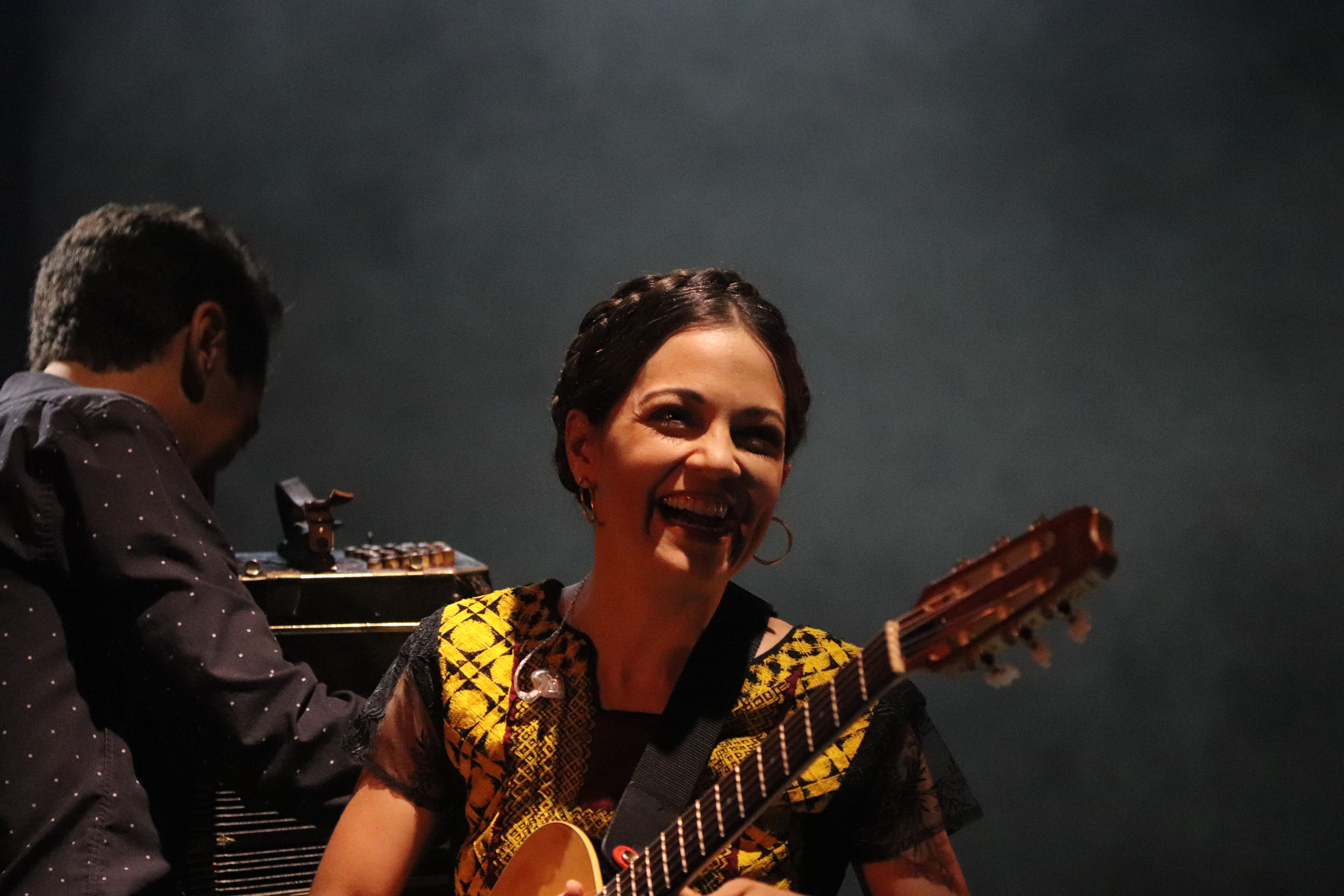
Bilder /Images: Randy Rodriguez: Tanzende Frau / Dancing woman (Pixabay); Martinbayo: Natalia Lafourcade, 2018 (Wikimedia commons)
Hintergrundmusik Podcast: Light_Music: Memories returning (Pixabay)
 LiteraturPlanet